

You reach out to pet your dog – the same one you’ve spent years with side by side – and he suddenly turns around and snaps his teeth right at your hand.
Or worse, it really bites. Shock, confusion, resentment. And the first thought that comes to mind is: “Why? I didn’t do anything wrong!”
This is where the fun begins. Because a dog doesn’t bite without a reason. Never. Behind every such action there’s a story we simply didn’t have time to read. Or didn’t want to. Or didn’t know how.
I don’t claim to be the foremost expert on canine souls—I’m simply someone who has spent years observing these creatures with undisguised admiration and trying to understand their language. Here’s what I’ve learned from these observations.
Reason one: pain that no one noticed
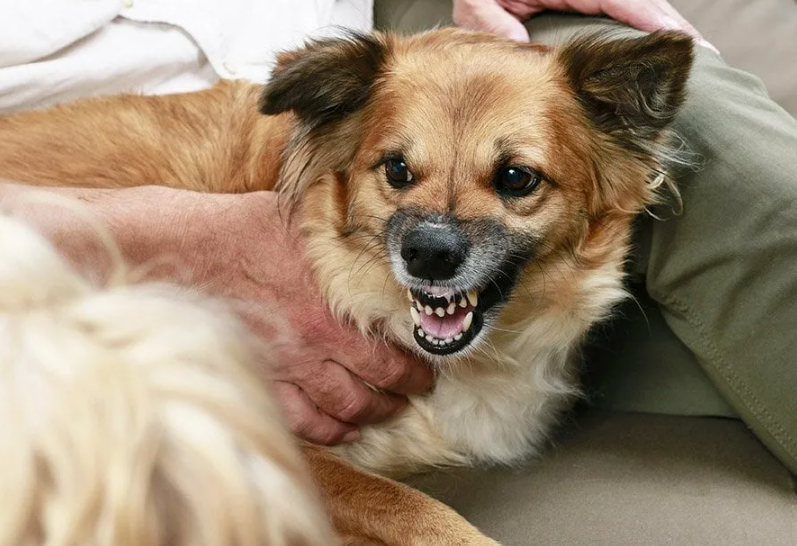
He’s angry
This, in my experience, is the most underestimated and yet most common cause of sudden aggression. Dogs are stoic by nature. They endure. For a long time. Silently. And that’s why we so often miss the moment when our pet is truly in distress.
Imagine this: you’ve had a toothache for three days. You wince, but endure it. And then someone—completely by accident, with the best of intentions—slaps you on the cheek. What do you do?
You’ll likely jerk away and say something impolite. A dog in the same situation does the same thing—except it can’t speak, so it uses its teeth.
Joint problems, ear inflammation, a sore spine, toothache, skin irritations – all of this can be completely unnoticeable to us, but at the same time exhausting for the animal.
The dog is lying down, you approach, gently scratch behind its ear—and suddenly you hear a growl or feel a bite. And this isn’t aggression in the usual sense. It’s a cry for help.
Particular care should be taken with older dogs. Arthritis, spinal problems, and vision and hearing impairments can all alter a dog’s behavior beyond recognition.
A dog who’s been an angel for ten years suddenly becomes irritable and snaps. People often think he’s “gone bad” or “becoming dominant.” But in reality, he’s simply in pain and needs a vet, not a trainer.
If your dog’s behavior changes suddenly and without apparent reason, the first thing to do is take him to the vet. This isn’t advice, it’s almost a rule.
Reason two: fear is stronger than love
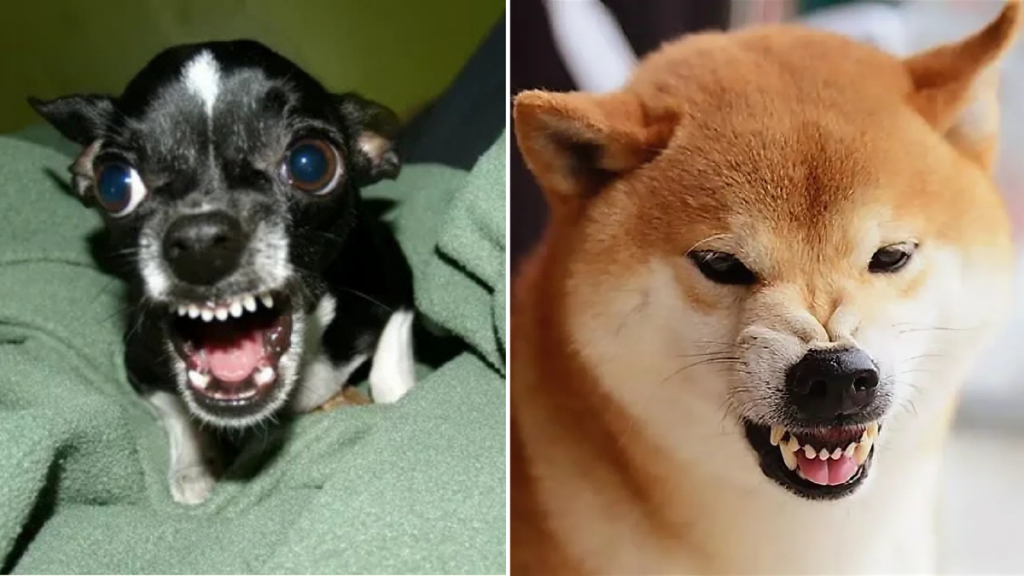
Dangerous
Here’s a paradox that still amazes me: a dog can truly love its owner—and yet bite him out of fear. Not malice.
Not out of a desire to hurt. But because at some point the instinct for self-preservation proves stronger than attachment.
Fear is a powerful driver of aggression in dogs. And it works according to a very simple pattern: threat – no escape – attack. When an animal is cornered (literally or figuratively), it attacks. Even if it’s their beloved owner standing in front of them.
I think many of us underestimate how frightening our own behavior can be to a dog.
A sudden movement, a loud scream, an attempt to grab a pet during a stressful moment, or leaning over them with a hovering posture—all of these can trigger a defensive reaction, especially in dogs that have had negative experiences in the past.
By the way, the past is a whole other topic. If you adopted a dog from a shelter or the street, you never know what exactly it went through before you. Some triggers can lie dormant inside for years, only to be triggered by a seemingly innocuous gesture.
A man in a hat, the smell of alcohol, a male voice of a certain timbre – and now the dog reacts as if he were facing an enemy.
Fear-based aggression isn’t a personality trait. It’s a trauma. And it can be corrected if addressed wisely and patiently.
Reason three: what we ourselves have taught
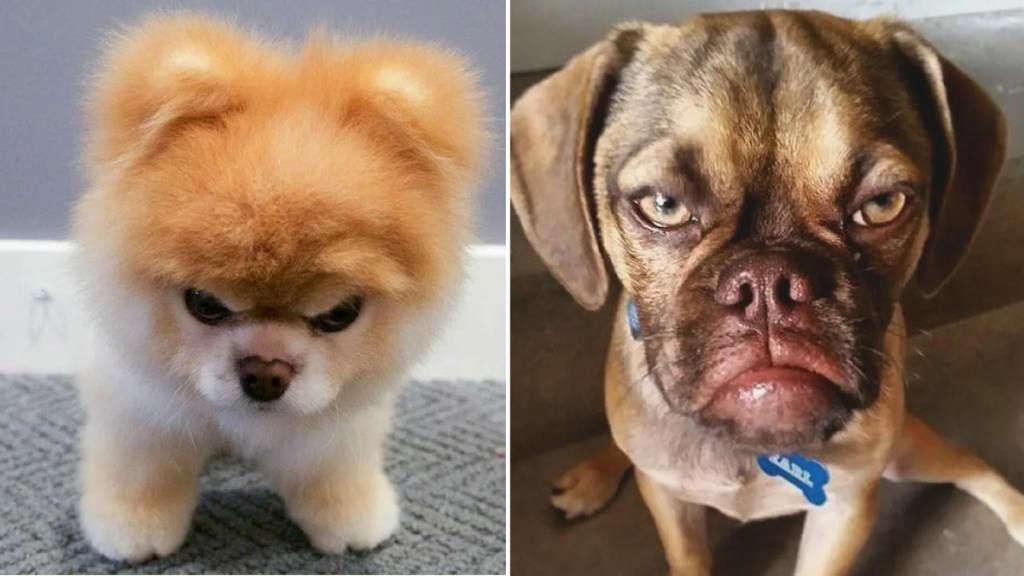
It’s my own fault
Here’s where I’m willing to argue a bit with those who tend to attribute everything to “bad breed” or “bad character.” Because, in my observations, in the vast majority of cases, a dog’s aggression is a mirror—a reflection of how it was treated.
A dog that is frequently physically punished, pulled, yelled at, poked in the nose, spanked – grows up in a state of chronic stress and anxiety.
And such a dog perceives an outstretched hand not as a gesture of love, but as a potential threat. Because it was precisely from an outstretched hand that she got hurt before.
This isn’t malicious intent on the owner’s part—most often, people do what their parents did with their dogs, or what “knowledgeable people” in the neighborhood advised them to do. But the consequences can be very serious.
Lack of socialization is a separate story. A puppy that has seen nothing but an apartment and one family grows up into a dog that literally doesn’t know how to react to strangers, children, other animals, or noisy streets.
And this confusion very easily turns into aggression – because attack seems to be the animal’s only way to cope with an incomprehensible and frightening world.
The good news is, it can be fixed. Not always completely, not always quickly—but it can be done. Proper training, based on rewards rather than punishment, can transform even the most anxious dog. The key is patience and finding the right professional.
Read Also :- Black Russian Terrier: 10 Interesting Facts About the Dog
Reason number four: “Don’t touch what’s mine”
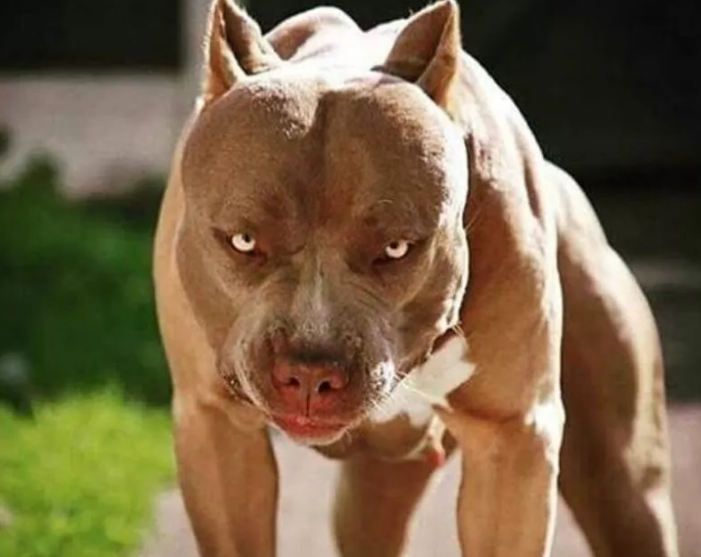
It’s better not to approach
Resource aggression is perhaps one of the most understandable causes when viewed through a dog’s eyes. The animal is guarding what it considers valuable.
Food, a bone, a toy, a favorite place, the owner, the puppies. This isn’t a whim or a bad character—it’s a survival instinct deeply ingrained in the dog’s DNA.
Imagine you’re having lunch, and someone comes up to you and starts snatching your plate from under your nose. Even if it’s your best friend, your initial reaction probably won’t be the friendliest.
The problem is that many owners accidentally reinforce this reaction. They see their dog growling over food and start scolding them or try to take the bowl away by force.
The dog concludes: its suspicions have been confirmed, they really are trying to take the food, and it needs to defend itself more actively. A vicious circle.
It’s much smarter to work with this calmly and methodically. Teach your dog from puppyhood that a person approaching the bowl isn’t a threat, but an opportunity to get something tasty. That giving up the object means getting something better. It takes time, but the results are worth the effort.
Perhaps the most unexpected form of resource aggression is guarding the owner. The dog growls at family members or guests who approach “his” person.
It looks cute until it goes too far. In reality, it’s a signal: the dog is anxious, doesn’t know how else to cope, and needs help.
Reason number five: hormones, stress, and everything we forget about
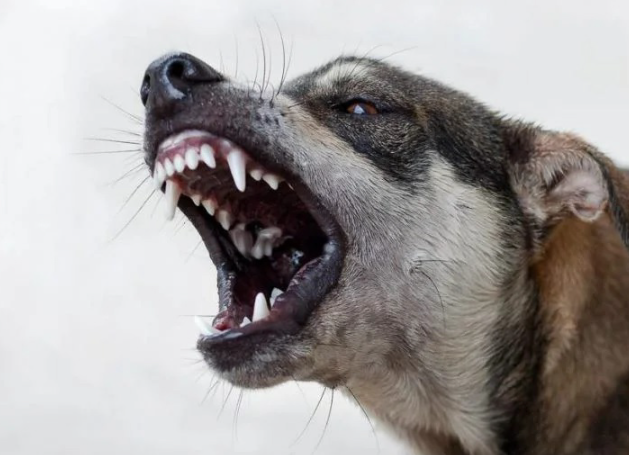
I’ll bite you right now
This reason is a little more complicated, because it combines several factors at once – and all of them are connected with the internal state of the animal, which we cannot see from the outside.
Unneutered male dogs can exhibit completely unpredictable behavior during the sexual season. Testosterone levels soar, irritability increases, and patience plummets. A dog that usually responds calmly to touch suddenly begins to snap—because he’s literally on edge.
Female dogs in heat, pregnancy, or after giving birth can also exhibit previously unnoticeable aggression. This is a hormonal storm, and judging an animal for it is as pointless as judging a person for mood swings.
But it’s not just about hormones. Chronic stress is a whole other story. A dog living under constant stress (noise, family conflicts, loneliness, lack of walks and exercise) is a ticking time bomb.
When an animal has no outlet for energy and no opportunity to relax, even a small irritant can be the last straw.
I always think of a dog as a creature with a very rich inner life. Is she bored? She’s angry. Is she lonely? She’s suffering. Is she afraid and confused? She’s defensive. And all this – even though she can’t tell us about it in words.
What should we take away from all this?
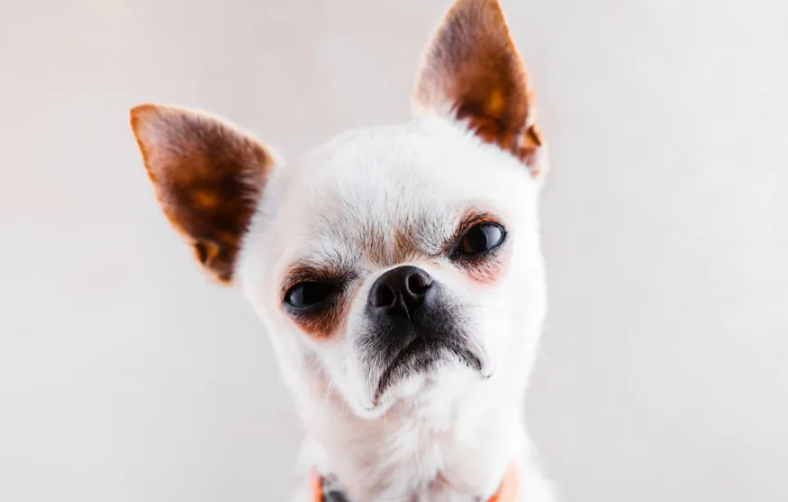
A dog never attacks “just like that.” There’s always a reason – visible or hidden, understandable or requiring careful investigation.
And almost always aggression is preceded by signals that we, unfortunately, tend to ignore: a tense body, averted gaze, pressed ears, freezing, a light growl.
Growling isn’t rudeness. It’s communication. It’s the dog telling you, “I’m uncomfortable, please stop.”
If we punish her for growling, we disable her warning system. And then the bite really does come without warning. But that’s our responsibility, not the dog’s.
Understanding your dog isn’t mysticism or the preserve of professionals. It requires attentiveness, observation, and a willingness to recognize that they are living beings with their own inner world, not just pets “obliged” to behave well.


Pingback: Can a rat attack a cat? What are the dangers of such an encounter? - BuzzBlastZ