
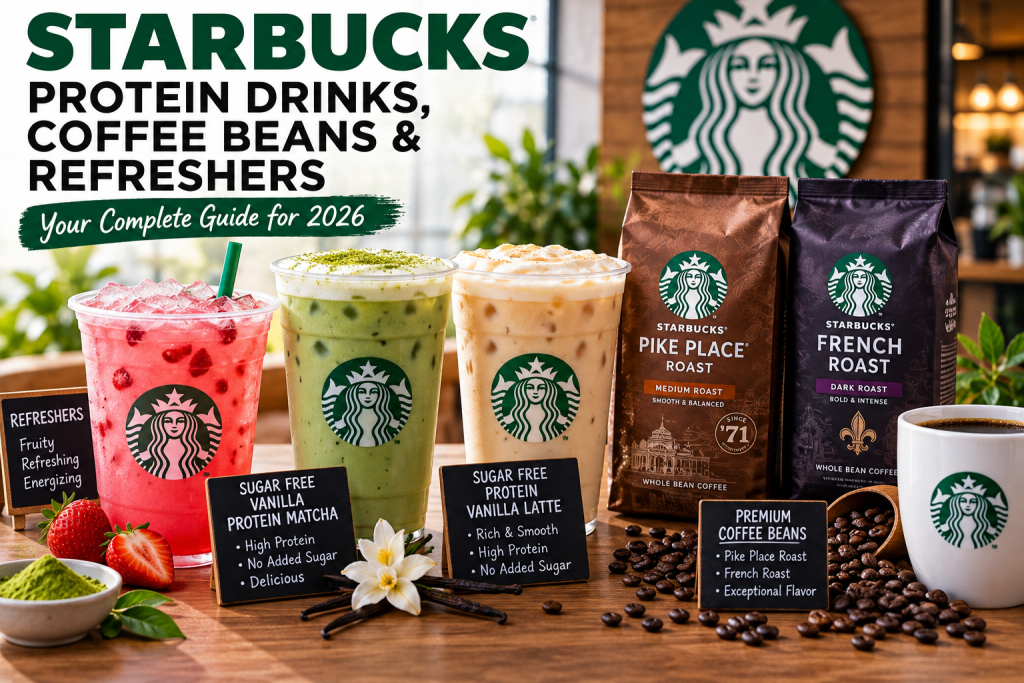

If you are searching for Starbucks protein drinks, the latest Starbucks menu has more options than traditional coffee and espresso drinks.
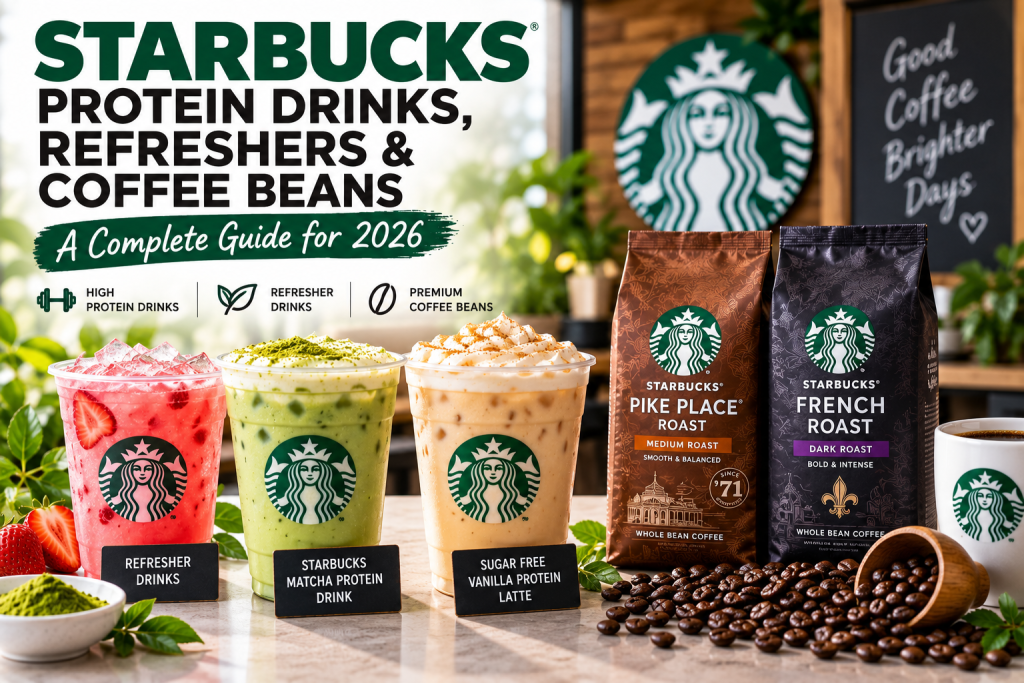
From the Starbucks sugar free vanilla protein matcha to the sugar free protein vanilla latte Starbucks offers, protein-focused beverages have become a bigger part of the menu. At the same time, classic coffee options such as Pike Place coffee beans and French Roast beans remain popular choices for people who prefer brewing Starbucks coffee at home.
Then there are the colorful Refresher drinks, including newer Energy Refreshers designed to provide additional caffeine.
In this guide, we’ll look at Starbucks protein drinks, matcha beverages, coffee beans, Refreshers, and some of the easiest ways to decide which option fits what you’re looking for.
Starbucks Protein Drinks: What’s Available?
Starbucks has expanded its protein beverage lineup considerably.
The current protein menu includes options such as:
- Sugar-Free Vanilla Protein Latte
- Iced Sugar-Free Vanilla Protein Latte
- Sugar-Free Vanilla Protein Matcha
- Iced Sugar-Free Vanilla Protein Matcha
- Sugar-Free Caramel Protein Latte
- Sugar-Free Caramel Protein Matcha
- Vanilla Protein Latte
- Caramel Protein Latte
- Protein Matcha
- Protein cold foam drinks
The company says its Protein-boosted Milk can also be used to customize many dairy-based beverages.
That makes the current Starbucks protein menu useful for people who want either a coffee-based drink or a matcha-based option.
Starbucks Sugar Free Vanilla Protein Matcha
The Starbucks sugar free vanilla protein matcha combines unsweetened matcha, sugar-free vanilla syrup, and Protein-boosted Milk.
According to the current Starbucks nutrition listing, a grande hot version has 28 grams of protein, 240 calories, 16 grams of total sugar, and 0 grams of added sugar. It also contains approximately 75 mg of caffeine.
The iced version has a slightly different nutritional profile. A grande Iced Sugar-Free Vanilla Protein Matcha is listed at 210 calories, 10 grams of total sugar, and 31 grams of protein, with approximately 65 mg of caffeine.
One important detail is that Starbucks describes these recipes as handcrafted, so nutrition can vary with preparation and customization.
Why people are interested in this drink
The drink combines three things that many Starbucks customers are searching for:
- Matcha flavor
- Vanilla flavor without added sugar
- A higher-protein beverage
If you prefer a cold drink, the iced version is especially easy to order.
Starbucks Matcha Protein Drink: Is It the Same as Vanilla Protein Matcha?
The terms Starbucks matcha protein drink and Starbucks protein matcha can refer to several drinks on the current menu.
The regular Protein Matcha uses matcha, classic syrup, and Protein-boosted Milk, while the Sugar-Free Vanilla Protein Matcha uses sugar-free vanilla syrup instead.
Starbucks currently lists both regular and sugar-free protein matcha options.
So if you’re searching for a Starbucks matcha protein drink, check whether you want the regular sweetened version or the sugar-free vanilla version.
Sugar-Free Vanilla Protein Matcha vs Protein Matcha
| Feature | Sugar-Free Vanilla Protein Matcha | Protein Matcha |
|---|---|---|
| Matcha | Yes | Yes |
| Protein-boosted Milk | Yes | Yes |
| Vanilla flavor | Sugar-free vanilla syrup | No vanilla by default |
| Added sugar | 0g | Depends on recipe |
| Hot option | Yes | Yes |
| Iced option | Yes | Yes |
For people specifically looking for no added sugar Starbucks drinks, the sugar-free vanilla version is the more relevant option.
Sugar Free Protein Vanilla Latte Starbucks
If you prefer coffee instead of matcha, the sugar free protein vanilla latte Starbucks offers is another protein-focused option.
The drink combines Starbucks signature espresso with Protein-boosted Milk and sugar-free vanilla syrup.
The current Starbucks listing shows that a grande Iced Sugar-Free Vanilla Protein Latte contains 29 grams of protein, 200 calories, 9 grams of sugar, and 0 grams of added sugar. It also contains approximately 150 mg of caffeine.
The hot Sugar-Free Vanilla Protein Latte contains 27 grams of protein per grande, according to Starbucks’ current nutrition information.
Iced vs hot sugar-free vanilla protein latte
If you like a cold coffee, choose the iced version. If you prefer a traditional warm latte, the hot version is the natural choice.
Both use sugar-free vanilla syrup and Protein-boosted Milk.
Which Has More Protein: Matcha or Vanilla Protein Latte?
The answer depends on the exact drink and preparation.
For example, the current iced Sugar-Free Vanilla Protein Matcha is listed at 31 grams of protein per grande, while the Iced Sugar-Free Vanilla Protein Latte is listed at 29 grams.
That means the difference is relatively small.
Your choice can therefore come down to flavor:
Choose matcha if: you like green tea and a smoother, earthy flavor.
Choose the latte if: you prefer espresso and a traditional coffee taste.
Starbucks Protein Drinks With No Added Sugar
One of the more useful parts of the current menu is the dedicated no-added-sugar protein category.
Starbucks currently lists sugar-free vanilla and caramel protein lattes and matcha beverages among its no-added-sugar protein options.
Some examples include:
- Sugar-Free Vanilla Protein Latte
- Iced Sugar-Free Vanilla Protein Latte
- Sugar-Free Vanilla Protein Matcha
- Iced Sugar-Free Vanilla Protein Matcha
- Sugar-Free Caramel Protein Latte
- Sugar-Free Caramel Protein Matcha
Remember that no added sugar does not mean zero sugar. Milk and other ingredients can still contribute naturally occurring sugars.
Read Also :- Starbucks Fall Menu 2026: Drinks, Food, Prices, Calories & Seasonal Favorites
What Are Starbucks Refresher Drinks?
Refresher drinks are a completely different category from Starbucks protein lattes and coffee.
Starbucks Refreshers are fruit-forward beverages designed around bright flavors and served over ice. The current menu also includes Energy Refreshers, which provide additional caffeine.
Starbucks says Energy Refreshers can contain up to 125 mg of caffeine per grande, with caffeine sourced from green coffee extract and B vitamins.
Current Energy Refresher choices include:
- Mango Strawberry Energy Refresher
- Strawberry Açaí Energy Refresher
- Mango Dragonfruit Energy Refresher
- Mango Dream Energy Refresher
- Pink Drink Energy
Starbucks also allows customers to customize certain Refreshers, including options involving lemonade, fruit inclusions, and caffeine.
Starbucks Refreshers vs Energy Refreshers
The biggest difference is caffeine.
Classic Starbucks Refreshers are fruit-forward beverages, while Energy Refreshers are designed with additional caffeine.
Starbucks says a grande Energy Refresher averages around 125 mg of caffeine.
If you’re looking for a fruity drink and don’t want a coffee or matcha beverage, a Refresher may be a better fit.
If you specifically want more caffeine, an Energy Refresher is worth looking at.
New Starbucks Refresher Flavors in 2026
Starbucks has continued expanding its Refresher lineup in 2026.
The company introduced Mango Strawberry Refreshers in classic, lemonade, and coconut milk versions, while Energy Refresher versions were also introduced.
The 2026 summer menu also introduced the Tropical Butterfly Refresher, featuring passionfruit and guava flavors with mango-pineapple flavored pearls.
That makes Starbucks Refreshers flavors an interesting search topic for anyone who likes fruity iced drinks.
Pike Place Coffee Beans: What Are They?
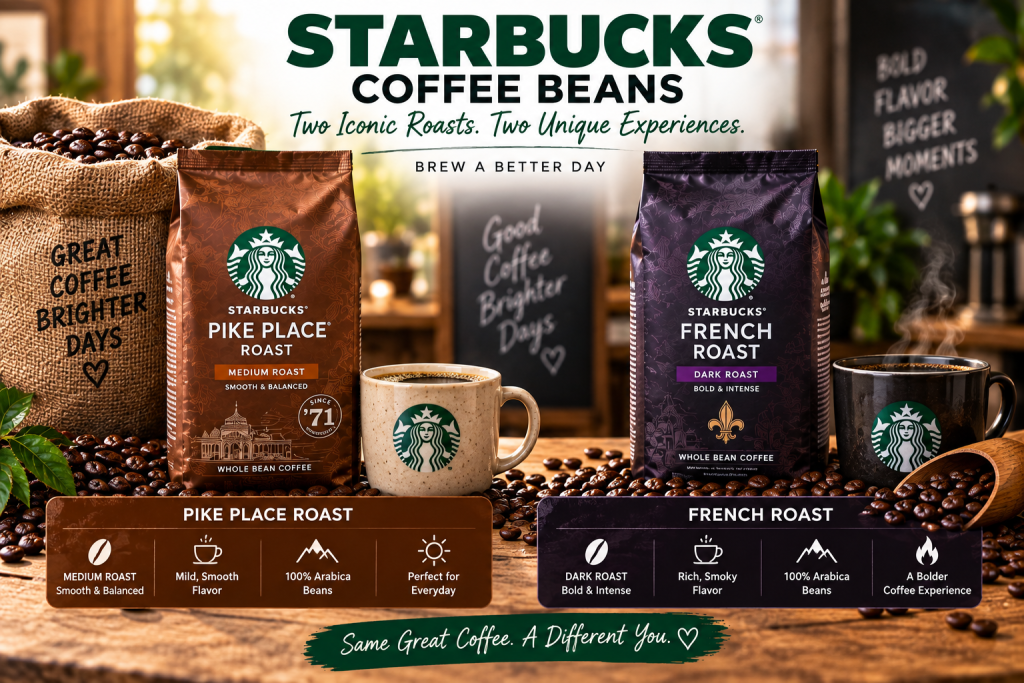
Moving from drinks to coffee beans, Pike Place coffee beans are one of Starbucks’ best-known coffee options.
Starbucks describes Pike Place Roast as a medium roast made with 100% Arabica coffee. The company says the blend was created in 2008 after customers wanted a coffee they could enjoy throughout the day.
Pike Place Roast is designed to be smooth and balanced rather than extremely dark or smoky.
Starbucks describes it as having rich, approachable characteristics, making it a useful everyday coffee for people who don’t want an overly intense roast.
What does Pike Place coffee taste like?
Pike Place Roast is generally a good choice if you prefer:
- Smooth coffee
- Balanced flavor
- Medium roast
- A less intense roast profile
- Everyday morning coffee
It can be brewed using several common methods after grinding the whole beans to the appropriate size.
French Roast Beans: How Are They Different?
If Pike Place Roast is on the medium side, French Roast beans take you much further toward a dark-roast profile.
Starbucks currently lists French Roast as a Dark Roast whole-bean coffee.
Dark roasts generally have a fuller body and a more intense roasted character than medium roasts. Starbucks describes its dark-roast coffees as fuller-bodied and bold.
Pike Place Roast vs French Roast
| Feature | Pike Place Roast | French Roast |
|---|---|---|
| Roast | Medium | Dark |
| Flavor style | Smooth and balanced | Bold and intense |
| Best for | Everyday coffee | Strong dark-roast preference |
| Bean type | 100% Arabica | Starbucks whole-bean dark roast |
| Intensity | Moderate | High |
If you enjoy smooth, balanced coffee, Pike Place coffee beans may be the better starting point.
If you prefer a darker, more powerful cup, French Roast beans may suit you better.
Pike Place vs French Roast: Which Should You Buy?
The answer mostly comes down to roast preference.
Choose Pike Place if you like:
- Balanced coffee
- Medium roast
- Smooth flavor
- Everyday drinking coffee
- A less intense cup
Choose French Roast if you like:
- Dark roast
- Bold flavor
- Fuller body
- Strong roasted notes
- A more intense coffee experience
Neither roast is automatically “better.” They’re designed for different preferences.
Best Starbucks Coffee Beans for Different Preferences
Starbucks has a broad whole-bean selection, including Pike Place Roast, French Roast, Espresso Roast, Caffè Verona, Sumatra, House Blend, and other coffees.
Here’s a simple way to think about the options:
For a balanced everyday coffee: Pike Place Roast
For a dark roast: French Roast
For espresso-based drinks: Espresso Roast
For a rich dark-roast experience: Caffè Verona
For something with a distinctive character: Sumatra
The best Starbucks coffee beans depend more on your preferred roast and brewing style than on a universal ranking.
Can You Use Pike Place Coffee Beans for Iced Coffee?
Yes.
Pike Place Roast can be brewed hot and chilled or prepared specifically for an iced coffee recipe.
Because it has a balanced medium-roast profile, it can work well when you want coffee flavor without the heavier character associated with some dark roasts.
For iced coffee, you can also adjust the strength of your brew because melting ice can dilute the final drink.
What Starbucks Drink Is Best for Protein?
If protein is your main priority, the current menu has several strong options.
The Iced Sugar-Free Vanilla Protein Matcha is listed at 31 grams of protein per grande, while the Sugar-Free Vanilla Protein Matcha hot version is listed at 28 grams.
The Iced Sugar-Free Vanilla Protein Latte provides 29 grams per grande, while the hot Sugar-Free Vanilla Protein Latte provides 27 grams.
Starbucks also offers other protein beverages and protein cold foam options.
Starbucks Protein Drink or Refresher: Which Should You Choose?
These drinks serve different purposes.
Choose a protein drink if you want:
- More protein
- Coffee or matcha flavor
- A creamy beverage
- A latte-style drink
- A more filling beverage
Choose a Refresher if you want:
- Fruit-forward flavor
- A cold, refreshing drink
- Something different from coffee
- A colorful iced beverage
- An Energy Refresher with additional caffeine
Your choice really depends on what you want from the drink.
Are Starbucks Protein Drinks Actually High in Protein?
Yes. Several current Starbucks protein beverages provide roughly 27–36 grams of protein per grande, depending on the drink and preparation. Starbucks states that protein amounts can vary because beverages are handcrafted.
For example, the current Iced Sugar-Free Vanilla Protein Matcha is listed at 31 grams of protein, while Starbucks’ protein information describes some matcha beverages as providing up to 36 grams.
This is substantially more protein than you would typically expect from a standard coffee beverage without a protein-focused formulation.
What Is Protein-Boosted Milk at Starbucks?
Protein-boosted Milk is a key part of Starbucks’ current protein beverage lineup.
Starbucks says it uses 2% milk with whey protein and that it can replace milk in hot or iced dairy-based beverages.
The company also offers protein cold foam that can be added to many beverages.
This means customers can build a drink around protein rather than being limited to the drinks specifically labeled “protein.”
Final Thoughts
The Starbucks menu in 2026 offers much more variety than traditional coffee.
If you’re interested in Starbucks protein drinks, the Starbucks sugar free vanilla protein matcha, Starbucks matcha protein drink, and sugar free protein vanilla latte Starbucks options are among the most relevant choices to explore.
For coffee at home, Pike Place coffee beans provide a smooth medium-roast option, while French Roast beans are better suited to people who prefer a darker, bolder cup.
And if coffee isn’t what you’re looking for, Refresher drinks and Energy Refreshers provide a fruit-forward alternative.
The easiest way to choose is to start with what you want from your drink:
Protein + matcha: Sugar-Free Vanilla Protein Matcha
Protein + espresso: Sugar-Free Vanilla Protein Latte
Balanced coffee beans: Pike Place Roast
Dark coffee: French Roast
Fruity iced drink: Starbucks Refresher
More caffeine + fruity flavor: Energy Refresher
Starbucks’ menu changes and regional availability can vary, so checking the current Starbucks app or menu before ordering is the best way to confirm availability and nutrition information.
FAQs
What is the Starbucks sugar free vanilla protein matcha?
It is a matcha beverage made with unsweetened matcha, sugar-free vanilla syrup, and Protein-boosted Milk. The current grande hot version is listed with 28 grams of protein and 0 grams of added sugar.
How much protein is in the iced sugar-free vanilla protein matcha?
The current Starbucks nutrition listing shows 31 grams of protein for a grande Iced Sugar-Free Vanilla Protein Matcha.
How much protein is in the sugar-free vanilla protein latte?
The hot Sugar-Free Vanilla Protein Latte is listed at 27 grams of protein per grande. The iced version is listed at 29 grams.
Are Starbucks protein drinks sugar free?
Some are designed with no added sugar, including the Sugar-Free Vanilla Protein Latte and Sugar-Free Vanilla Protein Matcha. However, they can still contain naturally occurring sugar from milk and other ingredients.
What are Starbucks Refreshers?
Starbucks Refreshers are fruit-forward iced beverages. Starbucks also offers Energy Refreshers, which can provide up to 125 mg of caffeine per grande.
What are Pike Place coffee beans?
Pike Place Roast is a Starbucks medium-roast coffee made with 100% Arabica beans. Starbucks describes it as smooth and balanced with approachable flavor.
Are French Roast beans dark roast?
Yes. Starbucks currently classifies French Roast as a Dark Roast whole-bean coffee.
Which is stronger, Pike Place or French Roast?
French Roast is the darker roast and generally has a bolder, fuller roasted character. Pike Place is a medium roast designed to be smoother and more balanced.
What is the best Starbucks protein drink?
It depends on your preference. For a matcha-based option, the Iced Sugar-Free Vanilla Protein Matcha is a high-protein choice. For coffee lovers, the Iced Sugar-Free Vanilla Protein Latte provides 29 grams of protein per grande.
Can you customize Starbucks protein drinks?
Yes. Starbucks says customers can customize many dairy-based beverages with Protein-boosted Milk and can add protein cold foam to many drinks.


